Manufacturing Case · Conditional 14-Day Rush
Conditional 14-Day Custom Mahjong Rush Plan for Trade Shows
A two-week ex-factory target can work when the tile manifest and artwork are final, materials and capacity are available, approvals are immediate, and freight is planned on day one. This capability playbook shows the gates Wetop keeps in the schedule.
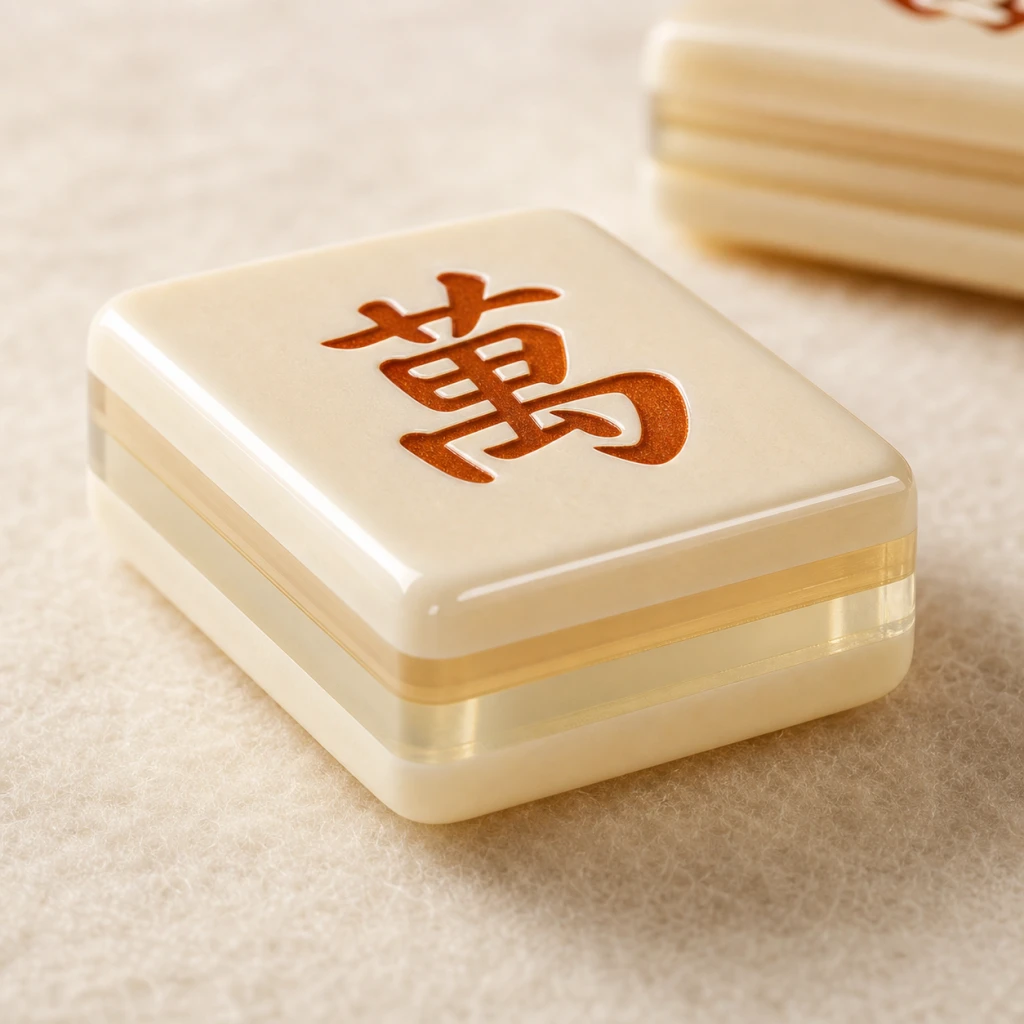
- conditional rush plan
- 14 days
- standard production days
- 15–20
- remote proof target
- 48 hrs
- set-count inspection target
- 100%
Key Takeaways
- A 14-day plan is conditional on production-ready artwork, a locked tile manifest, material availability, open capacity and immediate approval. Wetop confirms those gates before accepting a rush date.
- A 48-hour photo-and-video proof can remove courier waiting time when the buyer is confirming execution rather than choosing color; a physical sample remains the safer route for open material decisions.
- Two-layer tile construction bonds a pigmented back layer to the face layer, so the color is in the material on one side and the play surface stays glossy on the other.
- Character depth, UV fill, tile dimensions and layer construction are golden-sample controls, not values to assume from an illustration.
- Queue priority, parallel operations and pre-booked air freight compress waiting time without deleting set-count, artwork, bond-line or final inspection gates.
The Challenge
Consider a brand that has done everything in the right order except the calendar. Its designer has finished a full NMJL 152-tile American set — suits, winds, dragons, flowers, and eight Jokers in a palette built around a pigmented back layer — and the trade-show booth was paid for. What they did not have was a manufacturer, and by the time the inquiry reaches Wetop, the arithmetic is uncomfortable: our standard production window is 15–20 days after artwork approval, a single mahjong proof tile normally adds 5–7 days of sampling and courier time on top, and ocean freight was already off the table.
Trade-show deadlines have a property most production deadlines don't: there is no partial credit. A booth with no product is a cost, not a launch. The planning brief might require 50 complete sets on the booth table, plus enough margin for customs clearance and domestic transit, and require all of it without giving up the construction that justified their retail price: a two-layer tile with engraved, UV-filled characters, not a printed sticker face that reads as a toy.
The real question was not speed alone — it was what would be sacrificed for it: which days in a standard schedule are waiting days rather than working days, and which of them a rush production slot can buy back.
Our Approach
The conditional plan re-sequences the schedule around three decisions: replace the courier proof loop with a remote sign-off, run the two-layer lamination and the engraving programs in parallel, and give the order priority in the production queue so no batch sat waiting behind other work. None of these removes a manufacturing step. Rush, done honestly, is a scheduling product — the same processes in a tighter order, paid for with queue priority and air freight rather than with skipped QC.
A 48-hour proof sign-off instead of a 5–7 day courier loop
The standard mahjong sampling path is a single proof tile couriered to the buyer — 5–7 days by the time the box lands and gets reviewed. A rush schedule may not absorb that. Wetop can target a proof tile within 48 hours of artwork lock and run a structured remote sign-off using calibrated macro photographs of the face, back, and engraved channel, then a live video call with the tile in hand, tilted under directional light so the buyer could judge the gloss, the back-layer color, and the depth of the character fill. The physical tile stayed at the factory as the golden-tile reference every production tile was checked against.
The honest caveat is that a screen is not a substitute for material in hand when color is the open question. Remote review fits when the palette is already approved and the proof is confirming execution, not choosing a color. On a project where the palette itself is undecided, physical swatches are still worth the courier days — our mahjong ordering guidewalks through when each sampling path fits.
Two-layer construction, engraved and UV-filled
Each tile is a 30 × 23 × 13 mm body built from two bonded layers: a pigmented back layer that carries the set's color through the material, and a face layer that takes the playing surface. The characters are laser-engraved 0.3 mm into the face, and UV ink is printed into the engraved channel rather than onto the surface — the pigment sits in a recess below the wear plane, so decades of shuffling and racking polish the face without touching the artwork. On the production line, that construction adds two QC gates: the bond line is checked at lamination, and the fill is checked against the golden tile for coverage and registration.
Queue priority, parallel batches, and air freight
The remaining days must come from sequencing. Pigmented back-layer sheets can be laminated while the engraving programs were still being proven on the proof tile, so cutting started the morning after sign-off instead of days later. The order must hold the front of the production queue for its full run — that priority slot, not any skipped step, is what a rush fee buys. And the freight decision is made on day one, not at the end: air freight is quoted before the first tile is cut, so the production deadline and customs window are planned as one calendar instead of two.
Rush Acceptance Targets
If every eligibility gate is cleared, the plan targets ex-factory on day 14 after artwork approval. Each set still receives count, artwork, finish and golden-tile inspection. Customs clearance and last-mile delivery are separate logistics estimates, so the show date must include a buyer-approved freight buffer.
The number worth reading twice is the 48 hours. Production days are hard to compress — lamination, curing, and polishing take the time they take — but waiting days are not. Swapping one courier loop for a structured remote sign-off can recover several waiting days. The 14-day target is offered only after Wetop confirms capacity, material, file readiness and the approval process in writing.
Approved cutting and engraving programs can be retained for repeat orders. A repeat may reduce setup work, but each new batch still receives a first-article check; stored programs never replace current material and artwork approval.
Buyer decision summary: lock the tile manifest before the rush clock starts, approve the proof immediately, and reserve freight and production capacity as one calendar.
What This Means for Your Project
If you are working against a trade show, a retail reset, or a launch date, the useful move is to ask your manufacturer where the waiting days are, not just how fast they can go. On this project the answer was the sampling courier loop and the freight booking; on yours it might be artwork revisions or a color decision. A supplier who answers with a re-sequenced schedule is managing your deadline. One who answers with a shorter production number and no explanation is probably planning to skip something you will discover at inspection.
The second lesson is that rush and quality are not natural enemies — rush and undecided specsare. This order moved fast because the design was locked: tile count, construction, palette, and artwork were final before day one. If your spec still has open questions, spend the calendar there first; our custom mahjong tile spec guidecovers the decisions worth locking before the clock starts. With a locked spec, a 100-set MOQ, and the sampling path chosen to fit your timeline, Wetop can assess whether a two-week ex-factory plan is available.
Working against a show date or launch deadline?
Send us your artwork, tile count, and the date you have to hit — we'll come back with an honest schedule that shows where the waiting days are and what a rush slot actually buys.
Sample in 3–5 days · Standard production 15–20 days · 14-day rush only after capacity review