Manufacturing Case · Game-Brand Launch
Custom Acrylic Mahjong Tile OEM for a 12+ Colorway Brand Launch
A launch-ready mahjong program is controlled by a playable tile manifest, revision-locked vector artwork, signed color samples, a golden tile, complete set-count QC and tray-fit approval. This playbook shows how Wetop connects those gates.
- Project metric · colorways possible
- 12+
- Project metric · typical MOQ
- 100 sets
- Project metric · sample target
- 3–5 days
- Project metric · standard production
- 15–20 days
Key Takeaways
- NDA-first file handling, revision-controlled artwork and named approvals keep an IP-sensitive game launch moving without turning old drawings into production authority.
- Each colorway needs a signed physical reference and an agreed acceptance tolerance. Instrument readings support the decision; they do not replace buyer approval.
- A locked tile-face manifest and set-count sheet are the release gates for a playable product. Concept imagery is never used as the production bill of materials.
- Tile and tray should be sampled as one retail system so fit, removal force, presentation, pack count and transit protection are approved together.
The Brief
Consider a tabletop game brand launching its first custom mahjong line in several seasonal colorways. The commercial goal is a premium retail system, not loose decorated tiles: consistent hand feel, accurate faces, controlled color, a complete playable count, and a fitted tray that presents and protects the set. The buyer also needs IP-sensitive file handling and a schedule that connects sample approval to a fixed launch date.
The quotation should state the set standard, total tile count, spare-tile policy, finished dimensions, construction, engraving and color method, colorway split, tray format, retail carton and freight plan. A concept render can start the conversation, but only a released tile-face manifest can authorize production.
Our Recommendation
NDA-first onboarding with named-individual access
Wetop can start with a mutual NDA and route released drawings to the production roles that need them. The quote and approval record should name the controlling artwork revision. A fast handoff is useful only when the files are complete; unresolved faces, counts or colors remain pre-production questions rather than decisions pushed onto the factory floor.
12-color UV register with mill-cert + spectrophotometer protocol
For a multi-colorway program, each color needs a signed physical master. If the buyer requires a numerical tolerance such as ΔE ≤ 2, the agreement must also name the formula, instrument, illuminant and sampling frequency. Wetop can record spot measurements by batch, while the golden tile remains the practical visual and tactile reference at the line.
Launch freight planned before production
For a fixed event or retail reset, Wetop can quote a priority air batch and a lower-cost balance shipment. The buyer sees the cost and risk of each route before production starts. Transit and customs are estimates, so the plan includes a delivery buffer and does not present an ex-factory date as an arrival guarantee.
Spec Breakdown and Production
A useful sample starting point is a cast PMMA tile around 30 × 23 × 13 mm with eased or chamfered edges, engraved character channels and UV color placed inside the engraving. Those dimensions and depths are not universal: the buyer approves tile weight, corner feel, face clarity, artwork registration and rack compatibility on the production-grade sample.
Standard planning is 3–5 days for sampling and 15–20 days for production after approval. More colorways, custom-cast material, complex trays or split freight can extend the schedule. Wetop sequences material preparation, CNC or laser work, color application and tray production in parallel where the approved design allows it.
Production Metrics and Acceptance Targets
The first article should prove more than appearance. Wetop checks the tile dimensions, edge feel, layer bond, artwork position, engraving depth, color fill and tray fit. The buyer checks playability, visual hierarchy and brand color. Once signed, that golden tile and tray become the references for the run.
During production, colorways can move through cutting, engraving and color application as controlled batches. The recommended control is a first-article check at each setup change plus a documented sampling frequency for dimensions and color. At packing, every set is checked against the approved manifest so missing or duplicated faces are caught before the tray is sealed.
For repeat orders, Wetop can retain approved cutting programs, artwork references and color records. A repeat still requires confirmation of the current revision and a new first article because material lots, equipment setup and buyer requirements can change.
Packaging allocation should also match the launch plan. Display sets, retailer samples, photography sets and saleable stock can be identified separately rather than drawing from one undifferentiated air shipment. That decision improves launch control without changing the product itself.
Buyer decision summary: approve the playable face manifest, physical color masters, golden tile and fitted tray before volume production begins.
For game-brand product directors and IP licensors, the early decisions are the NDA and drawing workflow, playable set standard, color acceptance method and ownership of final artwork approval. These determine whether the schedule begins with engineering or avoidable clarification.
Substrate, tile weight, edge feel and tray fit are equally important. Buyers comparing OEM bids should request a production-grade tile and tray sample, not only a color chip. See the custom acrylic mahjong tiles spec guide and UV printing on acrylic guide for the decisions to include in the brief.
OEM Brief and Set-Control Checklist
A production-ready brief starts with the game standard and the complete face manifest. List every required face, duplicate count, joker or flower treatment, spare-tile policy and total pieces per set. Supply vector artwork with one stable ID per face and identify the controlling revision. Wetop converts that information into a count sheet used at programming, first article, set assembly and final packing. This is the strongest protection against an attractive but incomplete set.
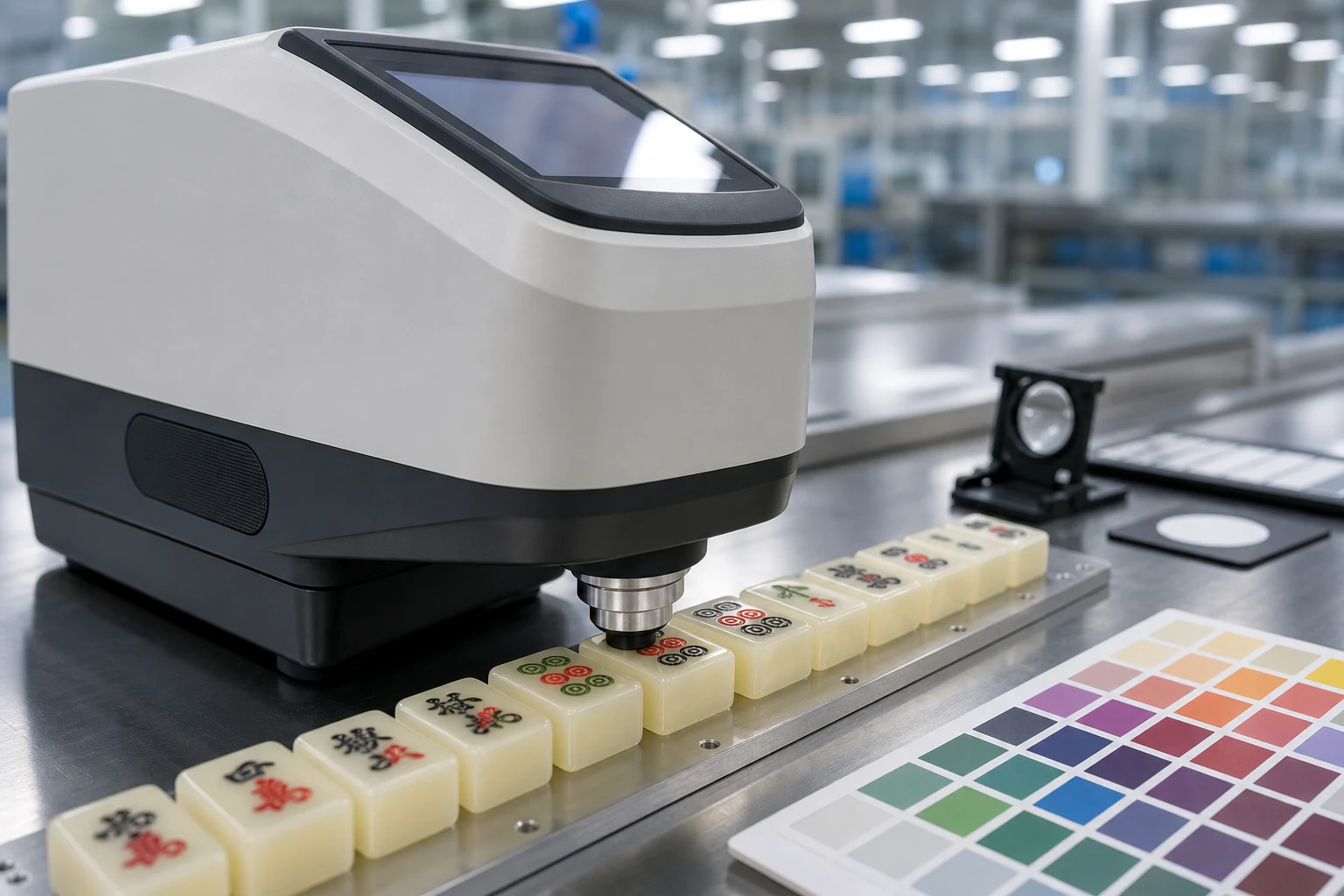
Next, define the physical system: finished tile dimensions, weight target, acrylic construction, opacity, layer colors, corner radius or chamfer, engraving depth, color application and acceptable face registration. Buyers should handle the golden tile under real play conditions and confirm rack compatibility before approving it. The image on this page demonstrates a possible manufacturing format; it does not replace the buyer's playable face manifest or golden sample.
Packaging is part of the acceptance plan. Specify the tile count per cavity, removal force, tray material, lid clearance, accessory spaces, retail carton and shipping carton. Wetop can prototype a fitted tray alongside the tile sample, then run a pack-out check using the complete approved count. For mixed colorways, the purchase order should map quantity by colorway and identify whether cartons are mixed or single-SKU.
See our custom acrylic mahjong tile sets page for available construction and customization routes. Send the manifest, vector files, color references, packaging concept and launch date together; Wetop can then return focused DFM questions instead of a quotation built on silent assumptions.
Scoping a custom mahjong or tabletop game OEM launch?
Send us your brief (under NDA), launch SKU + colorway count, and target launch date. We'll come back with NDA-handoff timeline, color-register protocol, mill-cert sample, and a production-grade tile prototype at your spec.
Sample in 3–5 days · Standard production in 15–20 days · Schedule confirmed after artwork and material review